



Peter: This is artist and writer Peter Cimpoesiu for Lansdowne Station.
Dominic: And this is Dominic Alfred. I’m a technology lawyer and writer. Welcome to Lansdowne Station where every week we discuss the intersection between relationships, culture, and technology. We will usually use a question and answer format for our publication. We made this decision because it captures the usual format of a dialogue people have amongst themselves, whether it’s with friends, family and someone you just met at a social gathering. We welcome you to join the comments section or let us know if you would prefer to talk about this week’s topic in our publication group chat.
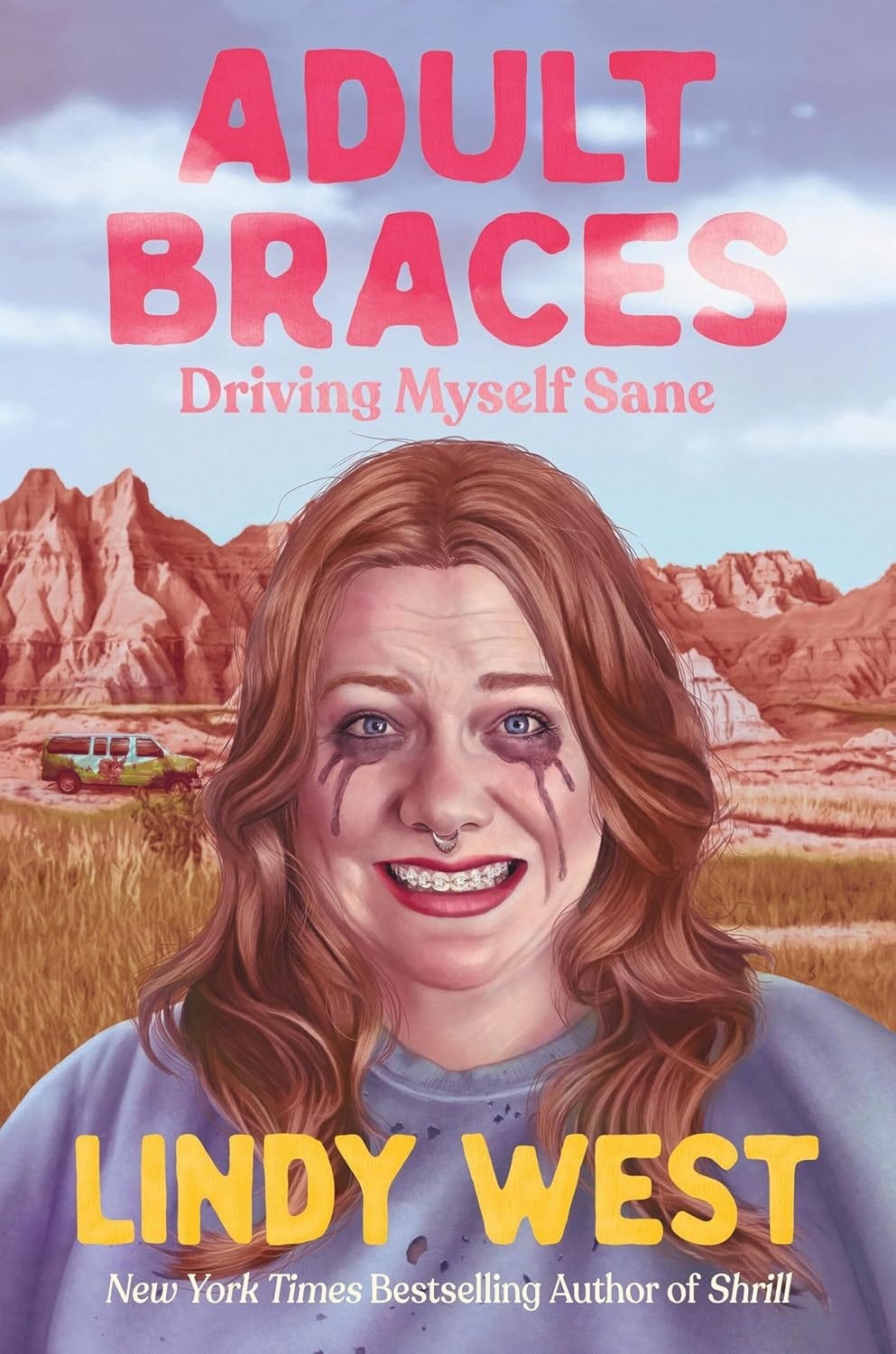
Photo credit: Hachette Book Group Digital, Inc./Lindy West
Peter: This week’s topic was inspired by Lindy West and her polycule. It’s been much discussed, especially in light of her recent book Adult Braces: Driving Myself Sane and the accompanying media tour. It’s probably beating a dead horse at this point, but I think it’s worth having at least one more whack at it. We’re going to be discussing the betrayals surrounding Lindy West.
Peter: Our theme this week is betrayal within the context of her relationship within her marriage, betrayal of her fans and her fans’ betrayal of themselves. So how did we come to this topic?
Dominic: Lindy West wasn’t someone known to me. I happened to come across this New York Times’ Modern Love article, and I told you I thought this was a very interesting story. It was a story about Lindy West’s polyamorous relationship. That’s the topic of this newsletter: does Lindy West’s polyamorous relationship act as a type of betrayal in different ways. Of course, Peter, you had a wealth of information about Lindy that I had no idea existed. To me, this was something brand new, and you had some interesting insights into who she is and her past controversies and how that all ties into what’s happening now.
Peter: Yeah, I just remember you coming into the living room when I was working on something, and you asked if I knew who she was, and my eyes kind of looked like boy do I know who Lindy West is! I was kind of an OG follower of hers, someone who knew about her from the very beginning, all the way back to the late 2000s when she was writing for The Stranger. I used to listen to Dan Savage’s podcast, as well as read his Savage Love articles online back when that was big. What first got her on my radar was when she got into a public feud with Dan. They worked together at The Stranger, and he wrote about banning “fat marriage” as a response to conservatives arguing for a ban on gay marriage on the grounds that it was “unhealthy”. I immediately had a lot of empathy for her, the way he spoke about people who were overweight had always struck me as mean-spirited. They had this public back and forth. I thought it was brave of her to say something to begin with, as she described him as “basically her boss”. She would go on to become a writer for Jezebel and became quite prominent as one of the leading voices in online feminism of that time, which we’ve come to describe as girlboss feminism, white girl feminism, or corporate neoliberal feminism. In some circles it’s now seen in a negative light, with snarky disapproval. That era was also defined by Lena Dunham, Amy Schumer, and other similar pop culture feminists who took a somewhat intersectional view of what feminism was but not to the level we see today. Very white-focused, very middle-class and upper-middle-class focused. Not quite intersectional aside from the occasional lip service to other groups. Sometimes tone-deaf. Very millennial-core.
Dominic: I can see that her lore goes way back.
Peter: Definitely. What I most remembered her for, even before I read her book Shrill, was an episode of This American Life in which she discussed her interaction with an online troll, it was called “Ask Not for Whom the Bell Trolls.” One of her trolls had created an online account impersonating her father, who had just passed. The troll created a profile and he pretended to be Lindy’s deceased father on Twitter and he posted something along the lines of, “Father of three great kids, one not so great disappointment,” which was really awful. She was quite vulnerable on This American Life about how, despite all the bitter vitriol she received online, that that troll’s Twitter post really got to her. And more surprisingly, after that happened, the troll actually reached out and apologized to her; she later interviewed him. It’s so rare to have one of your trolls actually apologize, especially for something that nasty. He ends up being really vulnerable as well, and it’s a great conversation. She writes about it in Shrill, which would eventually be adapted into a series on Hulu starring Aidy Bryant.
Dominic: So what I’m getting is that she was somebody quite popular in certain online spaces in the 2010s era. Why would people consider what she’s doing now a betrayal?
Peter: To start, we need to discuss how people think she was betrayed. What her fans seem most taken aback by is the fact that she stays with her husband after he gets a girlfriend despite how distressing non-monogamy is for her, which she admitted in Adult Braces.
Dominic: So what you’re saying is the first type of betrayal is from within her own marriage. Opening up her marriage to a third person, basically?
Peter: Exactly. And the reason this is seen as a betrayal is because she had specifically said that the idea of non-monogamy devastated her. It was something she never wanted.
Dominic: So why do you think she changed her position on non-monogamy?
Peter: First is that she frames monogamy, at least on her part, as a flaw; one related to her attachment style. She describes herself as very anxiously attached. She calls herself controlling, pretty much to an unhinged degree, unable to live without her husband, whose name is Ahamefule Oluo or Aham. But in reading her work she really didn’t sound controlling to me. The other thing that really irked people is that Aham intellectualizes monogamy as a form of colonialism, something Lindy agrees with. That her not wanting her husband to have a girlfriend was akin to her owning him.
Dominic: Well, as a Black man, I have some disagreements with that framing. I think weaponizing your background to justify selfish choices like that is manipulative.
Peter: It’s interesting that you say that, because a Slate article was written by Scaachi Koul, which I’d describe as not particularly hostile or even critical, but Aham’s response to it was completely unhinged, and Lindy eventually joined in saying, essentially saying well, you can’t criticize us because Aham is a person of color and because I self-identify as fat, and the third partner, Roya Amirsoleymani, is also a person of color. So they seem to be using that as a shield from criticism. It’s a very pre-2016 mentality.
Dominic: So they’re essentially using their identity as a shield from what a lot of people perceive as legitimate criticism, as well as a questionable living situation that’s been made public.
Peter: Exactly.
Dominic: Can you give some context on Roya and how she came into the picture?
Peter: According to Adult Braces, it was essentially an ambush. Lindy discovered that her husband was seeing another woman without telling her. A fan saw Aham with Roya in a romantic context and the fan privately told Lindy directly. While Lindy and Aham had previously discussed the concept of an open relationship (and had conceptually “technically agreed” to it in theory, with Lindy admitting she felt she didn’t have the self-esteem to object), there was no established plan, timeline, or agreed-upon partner.
Dominic: Yikes.
Peter: Yeah…Lindy discovering that this was already happening in practice, and without her informed consent, was basically “rock bottom” as she put it. According to her book, it shattered the initial boundaries of the marriage, leading to the “tumultuous years” and the cross-country road trip she describes in the book, as a way to “clear her head” and process the betrayal.
Dominic: Interesting. So, this all ties back into the betrayal theme. Was Lindy a willing participant in this polyamorous relationship, or was it something foisted on her?
Peter: That’s really the crux of it. You hear about similar dynamics from time to time.
Dominic: I remember something similar came up on Showtime’s Couples Therapy where one partner felt they needed to open the relationship, but in therapy the other partner revealed they weren’t on board. They felt it was being forced on them to keep the relationship alive. People have drawn comparisons to that dynamic here.
Peter: I remember that couple. It was a sweet guy just trying to hold on to his relationship while his partner just wanted to do whatever and whoever he wanted.
Dominic: Right. I don’t have a lot of contextual history of who Lindy is, but I was very struck by how sad the story seemed, how she presented herself as wrong or broken for wanting her relationship to remain monogamous. She gives off this desperate energy while trying to defend Aham.
Peter: What’s interesting is that she wants to talk about that stuff, but also maintain that she’s not a victim but a willing participant despite the anguish this has caused her. She even went so far as to say that her life is not subject to public audit — which is a very interesting perspective for someone who writes personal essays and books and publishes them for public consumption.
Dominic: And what about the commercial impact? It seems that she’s monetized access to her life but now it’s no longer yielding the benefits it once did. What I’m seeing is the impact of her choices or the choices forced on her now affecting her economically. Her book sales apparently have not been as good as projected. I think that speaks to the betrayal her fans may feel about a revisionist history of her past beliefs. Peter, do you want to speak to that?
Peter: I had read that. All the online buzz had not resulted in increased sales. In Adult Braces, Lindy goes back and essentially says that much of the content from her previous book Shrill wasn’t completely honest. That she was living her worst life then. Similarly, Lena Dunham, in a recent New York Times Magazine interview, said that she was not doing well during her time as the creator and star of HBO’s Girls. And I think it’s more than fair to go back and say, just because she was successful doesn’t mean she was doing well. That’s understandable. But Lindy essentially goes back on a lot of her past advice, for instance a famous piece she wrote when she got married called My wedding was perfect – and I was fat as hell the whole time. She’d always thought brides were thin and this would never happen to her but then she got what she framed as her happily ever after, which now seems to not be the case.
Dominic: Does it seem like she disavows her past work?
Peter: I think so. She basically disavows the version of herself from Shrill by characterizing it as a forced persona rather than her authentic reality. She wrote that her “previous modeling of defiance” had become an exhausting “24/7 project”. She felt that she couldn’t set it down without betraying her audience. Essentially, she admitted that the unwavering confidence she sold in Shrill was a hollow mask that she wore to survive her own insecurities. In Shrill, Lindy comes across as capable and intelligent whereas in Adult Braces, she leans heavily into her executive dysfunction. She reveals that she didn’t know how to make a car payment which led to her passport being confiscated. A big departure from the competent professional persona we were familiar with from Lindy. Some of it I have empathy for. For example, she admits in Adult Braces that there’s a correlation between when she weighs more and when she’s not doing well mentally. Some people might see that as a betrayal of her past body positivity messaging, but I give her a lot of grace with that. I don’t think it makes her a hypocrite. What raises more of an eyebrow is that she was so insecure about opening the relationship that she went to a weight loss doctor and considered weight loss surgery because she thought it would make her more attractive to Aham. Very male-centered behaviour. Some might say anti-feminist.
Dominic: Interesting. So, she’s done a 180 on her beliefs, and she’s seeing the effects of that. There were at least two opinion pieces in the New York Times, the Modern Love podcast, Slate articles, and any number of newsletters on Substack about the same issue. It seems to have hit a nerve. People have a lower tolerance for hypocrisy. At the same time, individuals are allowed to change their minds. But there’s a dissonance, do we believe what she said then, or what she says now? And that may be reflected in the book sales.
Dominic: Is this a left versus right issue? A monogamy versus polyamory issue?
Peter: This isn’t a left versus right issue. It isn’t even a monogamy versus polyamory issue because from what I’ve gathered, the ethical non-monogamy community is largely not on her side. The overwhelming response is, “Lindy, you might not have entered this open relationship on the best terms.”
Dominic: People I know who are in non-monogamous relationships will tell you: having agency is very important, having a set of ground rules is important, and being a full participant in how that structure is set up and maintained is critical. It seems like Lindy was ambushed and this was foisted on her. So, when people see her twisting her beliefs into knots to make it fit her current situation, they’re thinking, do you really believe this? Or are you just changing your tune because you can’t stand up to your husband, even though he is clearly manipulating you?
Peter: And we should note she sleeps in her own bed. Roya and Aham sleep together, and Lindy sleeps on her own. Make of that what you will.
Dominic: That’s an important detail. And at the end of the day, she’s ultimately accountable for her own choices. She must lie in the bed she’s made — no pun intended.
Peter: What about her fans’ attachment to her, I wonder given what’s out there about Lindy now, are her fans betraying themselves?
Dominic: I’m not very online, admittedly. Peter, you’re somewhat online and may have more context. But people create these deep attachments to online personalities. It’s a new technological frontier in relationships. We use dating apps to meet people online; we create online communities — but what do we owe ourselves when we have these parasocial relationships? With people like Lindy West, who makes a 180, challenging everything she once stood for? Her fans have described a strong sense of betrayal.
Peter: And her position seems to be, “Well, my personal life is mine and none of your business” — even though she made it our business. It’s puzzling to try and understand what Lindy expects from us. Even Lena Dunham, in that same New York Times interview I mentioned, acknowledged that she wanted to produce work, but did not want to receive any negative feedback on it. At least Lena Dunham was self-aware enough to acknowledge that.
Dominic: Is it fair to put things out into the world and not be critiqued for them? Look at us, we’re creating work ourselves. It would be unfair if we weren’t open to feedback.
Peter: Exactly. On that note — please only give us positive feedback, I am so sensitive lol. The last thing I want to mention as a betrayal of her fans is this: she really came across as someone who took on all this online vitriol, a lot of it was cruel but she stood her ground. What she did was very brave, putting herself out there publicly as an overweight woman and advocating for herself and other women. I was always impressed by her ability to rise above it. So it’s almost a slap in the face to see that the online scrutiny affected her a lot more than she let on. And it’s interesting that the vilest personal attacks on her, including using her deceased father, didn’t seem to affect her as much as people who, for the most part, don’t seem to have ill intention. They’re simply pointing out that maybe her marriage isn’t the healthiest one.
Dominic: I think it’s fair to be critiqued once you position yourself as a public figure in the way that she has. The situation asks some very important questions: first, within relationships, when people choose certain relationship styles, what do the people in that relationship owe to themselves? Second, what does a public figure and author who predicates their work on putting their life on display owe to their fans and supporters? And third, what do those fans owe to themselves? We hope the discussion was interesting. Let us know if you have any comments. Peter, why don’t you wrap us up?
Peter: Let us know what you think. Positive comments only since I am so much more sensitive than Lindy West.
Dominic: Thank you for reading our first instalment of Lansdowne Station. We welcome you to join the comments section or let us know if you would prefer to talk about this week’s topic in our publication group chat. This is Dominic and Peter. See you next time.